


Short Answer:
While wheel size and tire width can influence rolling resistance, tire pressure plays a more significant role. Properly inflated tires, regardless of their width or diameter, tend to exhibit lower rolling resistance.
Understanding Rolling Resistance
Rolling resistance refers to the energy lost as a tire rolls under load. Several factors influence this, including:
- Tire Pressure: Higher inflation pressures generally reduce rolling resistance by minimizing tire deformation.
- Tire Width: Contrary to popular belief, wider tires can have lower rolling resistance when inflated to the same pressure as narrower ones. [Fun fact: Racing bikes use narrow tires not to reduce rolling resistance directly, but because narrow tires can tolerate higher pressures.]
- Wheel Diameter: Larger wheels can reduce rolling resistance slightly, but the effect is less pronounced compared to tire pressure.
The Role of Tire Pressure
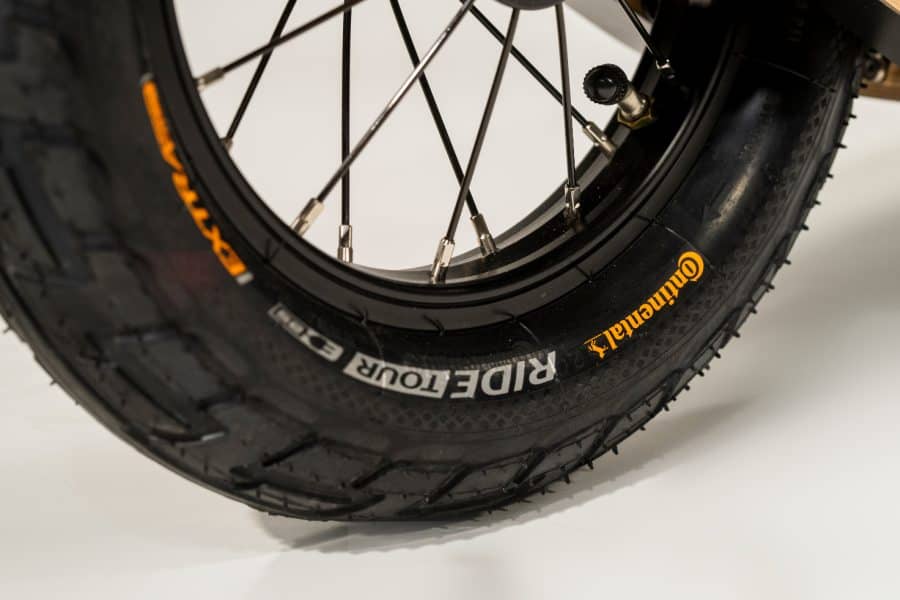
Maintaining optimal tire pressure is crucial. Under-inflated tires increase rolling resistance, leading to more energy expenditure and reduced efficiency. For instance, Boardy scooters utilize Continental balloon tires, that can be inflated up to 4 bar (58 psi), allowing them to roll more efficiently than many standard bike tires.
Expert Insights
- A study published in Ergonomics demonstrated that wider tires, when inflated to appropriate pressures, can exhibit better rolling performance than narrower counterparts, primarily due to decreased deformation and improved load distribution [1].
- Research by Suyabodha indicates that tire pressure plays a more critical role in rolling resistance than tire width or wheel size, with higher pressures leading to notably reduced resistance [2].
Conclusion
While wheel size and tire width do affect resistance, maintaining the correct tire pressure is paramount. Regularly checking and adjusting tire pressure ensures optimal performance and efficiency.
Sources:
- Influence of tyre pressure and vertical load on coefficient of rolling resistance and simulated cycling performance – Authors: F. Grappe, R. Candau, B. Barbier, J. Hoffman, L. Belli, J. Rouillon – Published in: Ergonomics, 1999
- A Relationship between Tyre Pressure and Rolling Resistance Force under Different Vehicle Speed – Author: Apiwat Suyabodha – Published in: MATEC Web of Conferences, 2017